
In today’s job market, your resume often goes through software before any human recruiter sees it. This software is usually called AI resume screening or an Applicant Tracking System (ATS). For many job seekers, this creates a lot of questions. One of the biggest is:
Should I opt out of AI resume screening?
If you have seen job applications where you can check a box to “opt out of automated screening”, it may feel like a big decision. But most people do not clearly understand what happens when they choose to stay in or opt out.
This article explains everything, so you can make the right choice for your situation.
What Is AI Resume Screening?
AI resume screening is the process where companies use software to read, filter, and score resumes before a human recruiter reviews them. Most large and medium companies use this software. The most common type is called an Applicant Tracking System (ATS).

How It Works
- A company posts a job description.
- Hundreds (sometimes thousands) of resumes arrive.
- The ATS scans each resume and looks for:
- Skills listed in the job posting
- Experience matching job requirements
- Job titles and keywords
- Education and certifications
- The software scores or ranks resumes.
- Only the top-ranked resumes are forwarded to a human recruiter.
That means if your resume does not match the keywords, it may never be seen.
Important Point
AI does not judge you personally. It simply matches text. If the job posting says “Project Management” and your resume says “Managed project tasks,” the system may not see it as a match.

The system is literal and rule-based. It does not understand nuance unless trained to do so.
Want to know which AI tools actually help you land more interviews?

Before sending your next job application, explore our guide: Best AI Resume Tools Reddit Users Recommend (2025 Guide
Why Do Companies Use AI Resume Screening?
There are a few main reasons.
1. Too Many Applicants
One job post can receive:
- 200+ applications for normal roles
- 1,000+ for remote roles
- 5,000+ for jobs at big companies
No recruiter can manually read every resume.
2. Faster Hiring
Companies want to fill jobs quickly. AI makes the early sorting fast.
3. Standardized Filtering
AI screens based on requirements, not personal feelings.
This is meant to reduce bias (though in reality, bias can still exist).
4. Organized Candidate Management
The ATS helps store and track resumes, interview notes, and hiring workflow in one place.
Should You Opt Out of AI Resume Screening?
This is the main question, and the answer depends on your situation.
When Opting Out Might Be a Good Choice
You can consider opting out when:
- You are applying to small companies or startups.
These companies may read resumes manually anyway. - The job is creative or portfolio-based (such as designer, writer, videographer, animator).
Your portfolio matters more than keyword matching. - You already have a referral inside the company.
An employee or hiring manager may forward your resume directly.
In these cases, opting out may help your resume reach a human faster.

When You Should NOT Opt Out
You should not opt out when:
- You are applying to large companies (tech firms, banks, corporations).
- The role is technical (engineer, analyst, developer).
- The job posting has strict required skills.
In these cases, opting out may reduce your chance of being considered.
Your resume might go into a slow manual queue that no one reviews.
Curious about how AI agents like ChatGPT are reshaping hiring and automation?

Dive deeper into the tech side of AI with our breakdown of ChatGPT Agent Mode: What It Is and How It Works
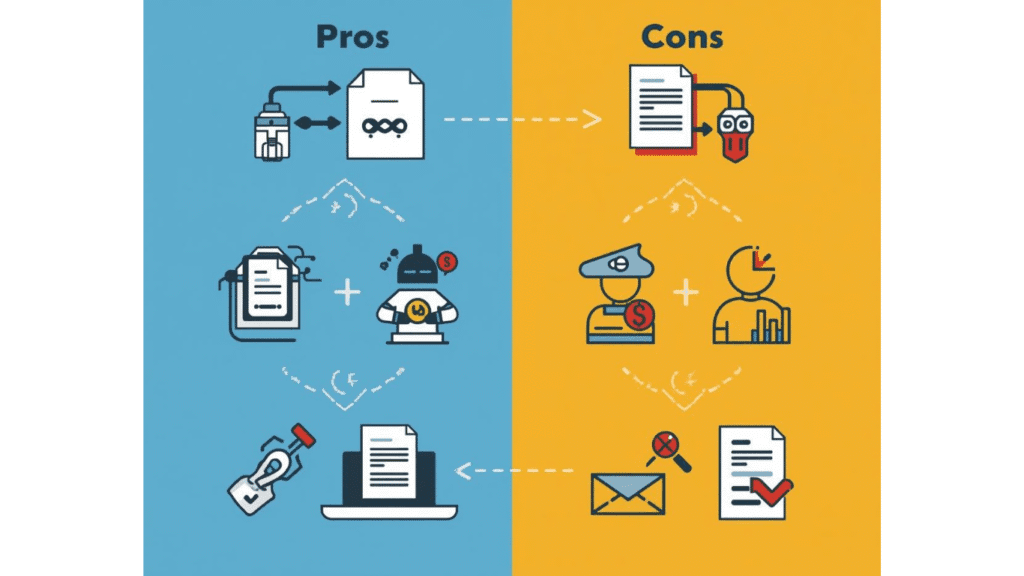
Pros and Cons of AI Resume Screening
| Pros | Cons |
| Speeds up hiring | Can reject strong candidates due to formatting errors |
| Helps filter large applicant pools | Relies heavily on keyword matching |
| Reduces some forms of manual bias | Can reinforce hidden algorithmic bias |
| Creates structured candidate evaluation | Can ignore soft skills and potential |
The system is not perfect, but it is becoming the industry standard.
How to Know If a Job Uses AI Screening
You can usually tell by:
- The application form used (Workday, Taleo, Lever, Greenhouse, etc.).
- The job posting is on large job boards (Indeed, LinkedIn Jobs, Glassdoor).
- The company is mid-sized or large.
- You never interact with a human during the early process.
If you see an option that says:
- “Allow automated processing of your resume”
- “Use AI screening”
- “Share data for automated evaluation”
It means the company uses an ATS.
What Happens If You Click “Opt Out”?
If you opt out:
- Your resume may be placed in a manual review queue.
- A human may review it but only if they have time.
- Your application may move slower.
- In some companies, manual review queue is never checked due to workload.
So opting out can mean:
- More personal review, but also
- Higher chance of being ignored
How to Improve Your Resume So AI Selects It
This is the most important part.
If your resume is not formatted correctly, AI may read it incorrectly. So let’s fix that.
1. Use Keywords from the Job Description
Look at the skills mentioned in the job posting and include the exact words in your resume.
Example:
If the job description says:
- “Project management”
- “Client communication”
- “Data reporting”
Make sure these terms appear in your resume exactly.
2. Use a Simple, Clean Format
Do not use:
- Images
- Tables
- Graphics
- Text boxes
- Icons
Use:
- Plain text
- Clear headings
- Bullet points
3. Use Standard Job Titles
Bad: “Customer Happiness Hero”
Good: “Customer Support Specialist”
AI understands “Marketing Manager” more clearly than “Brand Growth Champion” or “Marketing Ninja”.
Be carefull on this.
4. Save as Word (.docx) Unless Otherwise Stated
Some ATS struggle with PDFs.
5. Use Strong Action Verbs
Examples:
- Led
- Managed
- Designed
- Improved
- Analyzed
Before and After Example
| Before (Weak) | After (AI + Human Friendly) |
| Helped with marketing. | Managed 3 digital marketing campaigns and increased leads by 25%. |
Numbers help AI understand your impact.
Need quick, high-quality answers for applications, emails, or interview prep?

Check out Top AI Answer Generators You Need to Try in 2025
What Happens If You Select “Opt Out”?
Many job portals give you this option. But what does it actually mean?
If you opt out:
- Your resume may go to a manual review queue
- Manual review may take longer
- In some cases, your resume may never be reviewed
So opting out can lower your chances, especially in large companies.
This is why the safer decision for most job seekers is:
Do not opt out, optimize instead.
Real-World Case Study that How to Get a Chance
Two job seekers applied for the same marketing job:
| Candidate A | Candidate B |
| Did not optimize resume for AI | Used keywords and clear formatting |
| Opted out of AI screening | Passed AI screening |
| Never heard back | Received interview within 10 days |
The difference?
Candidate B worked with the system instead of avoiding it.
This happens more often than most job seekers realize.
Are AI Resume Screeners Fair?
Not always.
AI can be biased if:
- Data used to train it was biased.
- Job descriptions include biased language.
- Screening rules favor certain backgrounds.
However, AI does help reduce:
- Nepotism
- Personal favoritism
- Emotional bias
The best approach is to work with AI, not against it.
Decision Checklist
| If You… | You Should… |
| Apply to large corporate jobs | Do not opt out. Optimize your resume. |
| Apply to startups or small companies | You may opt out if networking. |
| Have a referral | You can opt out and send resume directly. |
| Rely mainly on portfolio | Opt out and highlight portfolio links. |
Best Practices to Improve Your Chances
Network on LinkedIn
LinkedIn is one of the best places to make job connections. Try to connect with people who work in the companies you are interested in. Like their posts, leave friendly comments, or send a short message saying you admire their work.
When someone inside a company knows you, your resume is more likely to be seen and sometimes can skip the AI filter.
Ask Recruiters About Their Hiring Process
Different companies use AI in different ways. Some use it a lot, some only a little. You can politely ask the recruiter questions like:
“Do you use AI to screen resumes?” or
“Is there a preferred resume format?”
This shows you are serious and helps you create a resume that fits what they are looking for.
Follow Up After You Apply
Many people send a job application and then never check back. Following up makes you stand out.
After 3–7 days, send a short message like:
“Hello, I recently applied for the [Job Title] position. I’m very interested. Just checking if there are any updates. Thank you.”
This small step shows interest and can help your application move forward.
Frequently Asked Questions Related AI Resume Screening
Q1. What is AI resume screening?
AI resume screening is when software analyzes resumes to check if they match a job’s requirements.
Q2. Can I bypass AI screenings?
You can, but bypassing often reduces your chances in large companies.
Q3. How do I make my resume AI-friendly?
Use keywords, clear formatting, and measurable achievements.
Q4. Is AI hiring fair?
AI removes some biases but may still reflect biases in training data.
Conclusion
So, should you opt out of AI resume screening?
For most people, the answer is no.
AI resume screening is now a standard part of hiring. Instead of trying to avoid it, it is better to learn how to work with it.
By using clear formatting, matching keywords, and highlighting measurable achievements, you increase your chances of being selected by both software and humans.