
Are you tired of “chatting” with AI only to have it give you even more work to do?
For the last few years, we’ve been stuck in the “Chatbot Era.” You ask a question, the AI gives you a block of text, and then you have to do the actual work like copying, pasting, and clicking. But in 2026, the world has shifted. We have entered the “Agentic Era.”
This guide is your comprehensive roadmap to the 15 best AI agents available right now. We have tested these tools for real-world utility, safety, and “bang for your buck” to help you move from being an AI prompter to an AI manager.
What Is an AI Agent?
Are you tired of “chatting” with AI only to have it give you more work to do? In 2024, we had chatbots. In 2025, we had assistants. But 2026 is the year of the AI Agent.
If you are new to this, don’t worry. The difference between a “Chatbot” and an “AI Agent” is simple: Action.
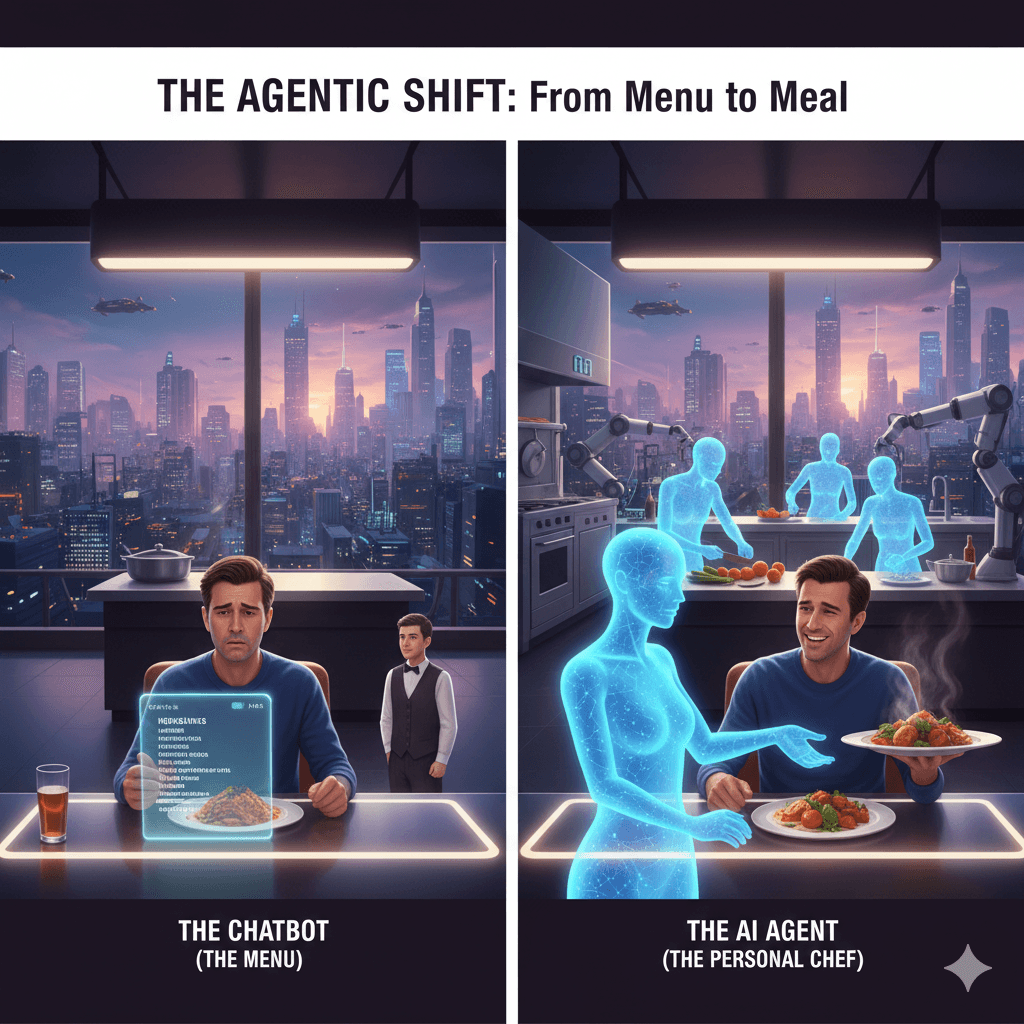
The Restaurant Analogy
- The Chatbot (The Menu): You ask what is in the lasagna, and it tells you the ingredients. It’s helpful, but you’re still hungry.
- The AI Assistant (The Waiter): It can take your order and bring you information from the kitchen.
- The AI Agent (The Personal Chef): You tell the agent, “I’m hungry for Italian,” and it goes to the market, buys the groceries, cooks the meal, and cleans the dishes.
The 4 Core Components of an Agent
- The Brain (LLM): This is the reasoning power (like GPT-o3 or Claude 3.7) that helps the agent understand what you want.
- The Memory: An agent remembers what it did five minutes ago and what your preferences are for next week.
- The Planning: Instead of just responding, the agent creates a “To-Do List” and checks things off one by one.
- The Tools: This is the most important part. Agents can use a web browser, write to your calendar, or send a message on Slack.
Why AI Agents are Trending in 2026
In 2024 and 2025, people suffered from “Prompt Fatigue.” Writing long, perfect paragraphs just to get an AI to do something basic was exhausting.
In 2026, the trend is Autonomous Workflows. We now want AI that works while we sleep. Businesses are no longer hiring “AI Prompt Engineers”; they are building “AI Workforces.” Whether you are a student, a small business owner, or a professional coder, agents are the “force multiplier” that gives you back 10–20 hours of your week.
Want to see ChatGPT Agent Mode in action? Build your first autonomous AI agent in minutes.
How We Ranked the Best AI Agents
To give you the most honest ranking, our team tested 50+ tools using these Expert Criteria:
- Autonomy Score: How often does the agent “get stuck” and need human help?
- Execution Accuracy: If you tell it to book a flight, does it book the right flight?
- Security & Permissions: Does the tool have safety “kill-switches” to prevent it from doing something accidental?
- Ease of Use: Can a primary school student set it up, or do you need a PhD in computer science?
Quick Comparison Table: Top AI Agents at a Glance
| Agent Name | Best For | Skill Level | Price Range |
| OpenAI Operator | Daily Web Tasks | Beginner | $20 – $200/mo |
| Devin AI | Building Full Apps | Advanced | $500+/mo |
| Lindy.ai | Small Biz Ops | Beginner | Free – $49/mo |
| Cursor | Professional Coding | Mid-level | Free / $20/mo |
| Clay | Sales & Leads | Mid-level | Paid (Usage) |
| Carly | Calendar & Tasks | Beginner | Free / $15/mo |
| Perplexity Pro | Deep Research | Beginner | $20/mo |
Agentic AI is replacing prompt engineering and start building goal-based AI systems now.Best AI Agents Overall: Detailed Reviews
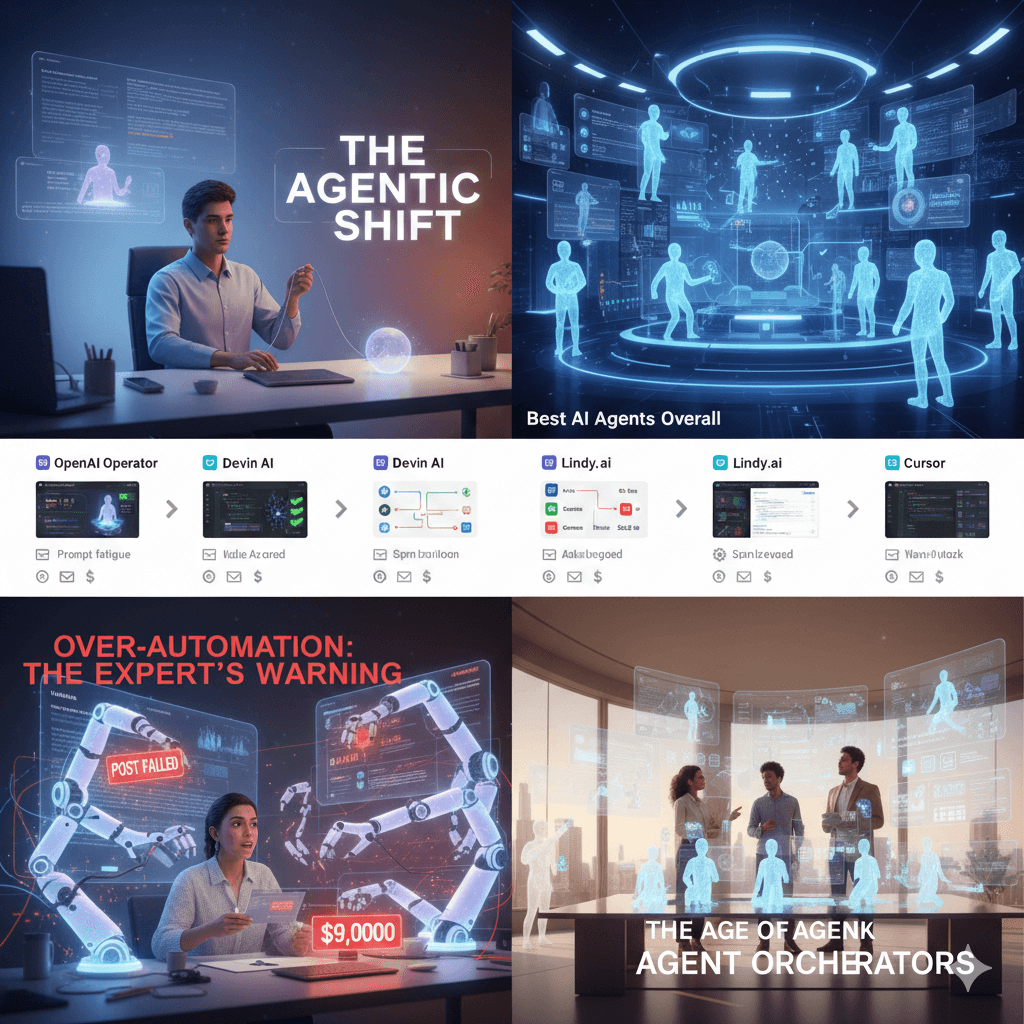
OpenAI Operator: Best for Daily Tasks
The OpenAI Operator is the “native” agent that lives inside your browser. It uses a technology called Computer Use (CUA) to see your screen and move the mouse just like a human.
- What it does best: High-level web chores. “Find me a pet-friendly Airbnb in Kyoto for under $150 and add the link to my vacation doc.”
- Key Feature: It asks for permission before hitting the “Buy” button, ensuring you don’t wake up to accidental charges.
- Limitation: It is still slightly slower than a human clicking manually, but it saves you the mental effort.
Devin AI: Best for Fully Autonomous Coding
Devin is the world’s first “AI Software Engineer.” While other tools help you write a line of code, Devin handles the whole project.
- What it does best: You can give it a GitHub link and say, “Fix these 5 bugs and deploy the site.” It will plan the fix, run the code in a private box, test it, and show you the result.
- Ideal User: Tech founders who want to build a “Minimum Viable Product” (MVP) without hiring a full dev team yet.
Lindy.ai: Best for No-Code Business Workflows
Lindy is the favorite for small business owners because it requires zero coding. You build “Lindies” (individual agents) for specific jobs.
- Example: Create a “Recruiting Lindy” that reads every resume in your inbox, filters the top 5, and emails them a link to book an interview.
- Pros: Incredible visual builder; connects to 4,000+ apps.
- Cons: Can be expensive if you run thousands of tasks a month.
Cursor: Best for Collaborative Coding
Cursor is not a separate agent; it is a code editor (IDE) with “agentic” powers built-in.
- The “Composer” Mode: You can tell Cursor, “Change the color of all the buttons and make the sidebar hide on mobile.” It will open 5 different files and make all the changes at once.
- Why devs love it: It feels like an extension of your own brain. It stays in the background until you need it.
Ready to build AI agents that collaborate? Start with CrewAI.
Best AI Agents by Use Case
Best for Research: Perplexity Pro & Genspark
If you are a student or a market researcher, you need these.
- Perplexity Pro: Its “Deep Research” mode performs 20+ searches in a row to find “hidden” information Google won’t show you.
- Genspark: It doesn’t give you a list of links; it creates a Sparkpage as a custom-built website that summarizes the entire topic for you.
Best for Sales: Clay & AiSDR
- Clay: Imagine a spreadsheet that is “alive.” You put in a company name, and Clay automatically finds the CEO’s email, checks their latest LinkedIn post, and drafts a personalized message.
- AiSDR: This is a “Sales Development Rep” that handles the entire email conversation with a prospect until they are ready to book a call.
Best for Productivity: Carly
Carly is a unique agent because it has no app. You just CC [email protected] on an email or text her.
- Task: “Carly, find a time for me and Sarah to meet for coffee next Friday.” She handles the back-and-forth and puts it on your calendar automatically.
AI Agents vs. Chatbots vs. AI Assistants
| Feature | Chatbot (2023) | Assistant (2025) | Agent (2026) |
| Main Goal | Answer questions | Help you write | Finish a mission |
| Autonomy | Zero | Low | High |
| Tool Use | None | Limited (Search) | Full (Browser/Apps) |
| User Input | Constant prompts | Frequent checks | One goal, then done |
Common Mistakes When Using AI Agents
Even in 2026, AI is not perfect. Here are the “Pro” traps to avoid:
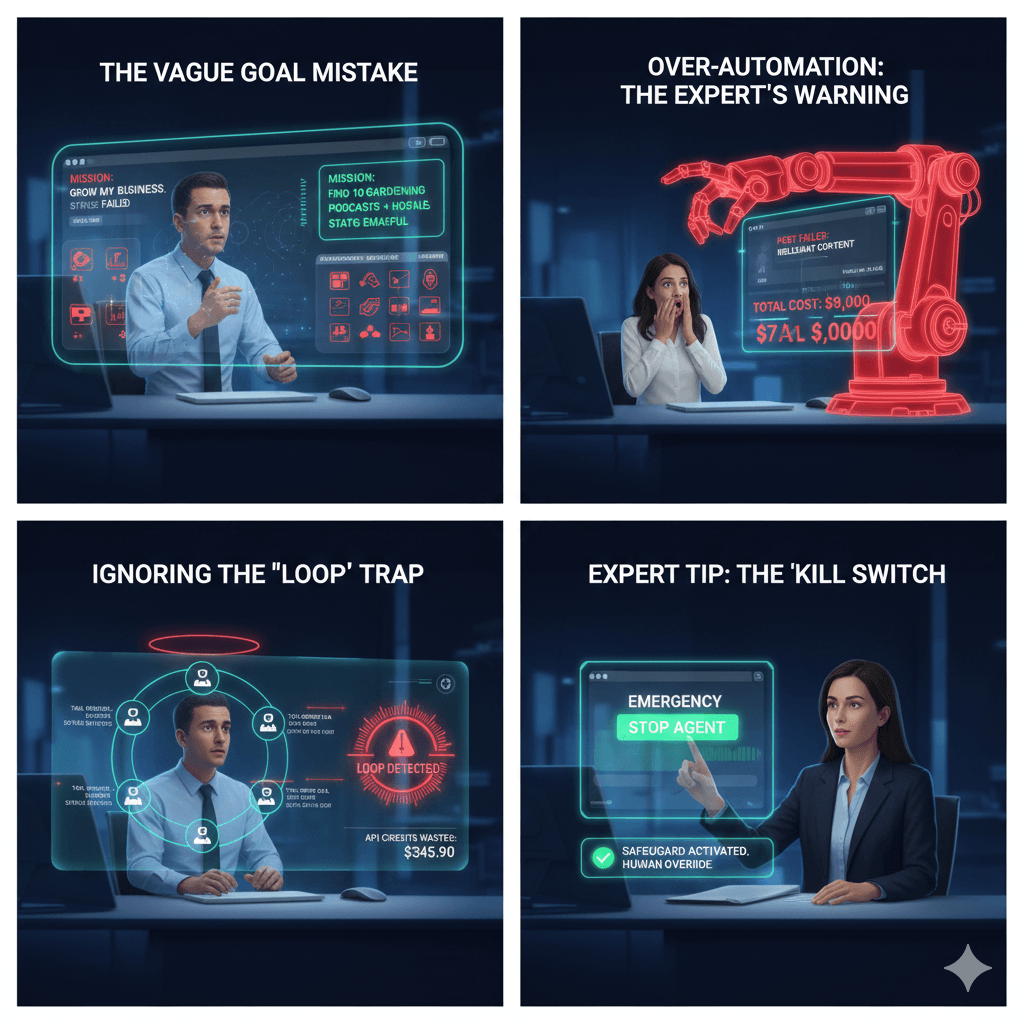
- The “Vague Goal” Mistake: If you tell an agent “Grow my business,” it will fail. Instead, say “Find 10 podcasts about gardening and find the contact email for their hosts.”
- Over-Automation: Don’t let an agent post to your main social media account without you reviewing it first. Brand voice is still a human job.
- Ignoring the “Loop”: Sometimes agents get confused and keep trying the same failing task over and over. Always check your dashboard to make sure an agent isn’t “spinning its wheels” and wasting your API credits.
Are AI Agents Safe to Use?
This is the biggest question of 2026. Because agents can “act” on your behalf, security is vital.
- Identity Management: Every agent should have its own “credentials” so you can see exactly what it did.
- Human-in-the-Loop (HITL): For sensitive tasks (like spending money or deleting files), always keep the “Approval” setting turned ON.
- Zero-Trust Architecture: Modern platforms like Microsoft Copilot Studio and Salesforce Agentforce use a “Zero-Trust” model, meaning the agent only sees the data it absolutely needs to finish the job.
- Read-Only vs. Write Access: In 2026, the best practice is to give agents “Read-Only” access until they prove themselves. Only grant “Write” access (the ability to delete or send) for specific, trusted tasks.
Future of AI Agents: What’s Coming Next?
By the end of 2026, we expect to see:
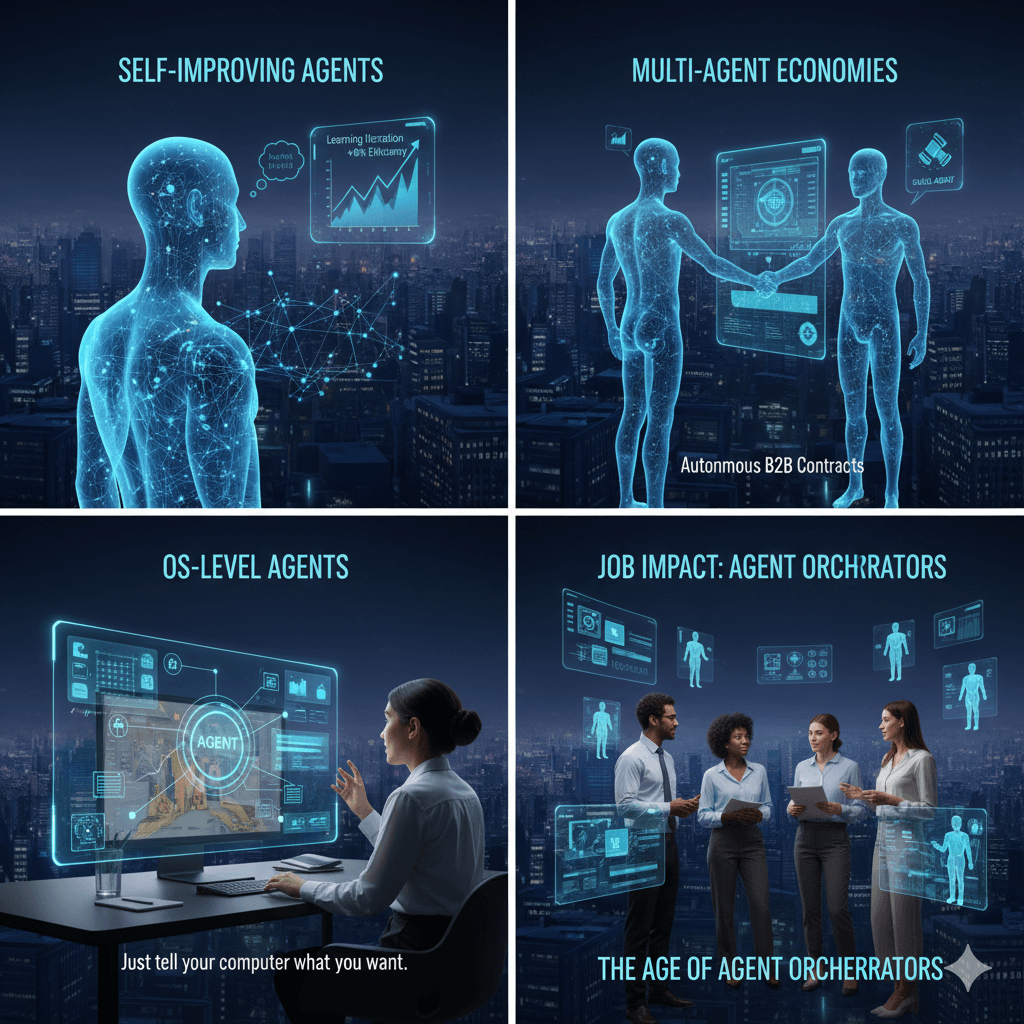
- Self-Improving Agents: Agents that learn from your feedback and get better at their specific job over time.
- Multi-Agent Economies: Your “Sales Agent” will talk to a “Legal Agent” from another company to negotiate a contract without any humans involved.
- OS-Level Agents: Instead of opening apps, you will just tell your computer (Mac or Windows) what you want, and the “Agent” will be the interface.
- Job Impact: 2026 is seeing a shift where 54% of executives expect AI to displace routine jobs, while new roles as “Agent Orchestrators” are emerging.
Ready to build your own AI agent? Get started with AgentX.
Conclusion: How to Start Today
Don’t try to build a 50-agent workforce on your first day. Follow this 3-Step Plan:
- Identify a “Boring” Task: Choose something you do every day that takes 15 minutes (like summarizing news or sorting emails).
- Pick a “Beginner” Tool: Start with Lindy.ai or OpenAI Operator.
- Run a Test: Give it a clear goal, watch how it works, and adjust your instructions.
The “Best” AI agent is the one that solves your biggest headache. If you are a coder, get Cursor. If you are a business owner, get Lindy. If you just want to save time online, use OpenAI Operator.
FAQ: Frequently Asked Questions
What is the best AI agent right now?
For daily productivity, OpenAI Operator is the best. For business automation, Lindy.ai is the most user-friendly. For coding, Cursor is the industry standard.
Are AI agents better than ChatGPT?
ChatGPT is a chatbot that answers questions. An AI agent is a system using a model like ChatGPT to actually perform tasks (like booking a flight or updating a database). They are different tools for different jobs.
Can AI agents run tasks automatically?
Yes. Unlike chatbots, agents can run for minutes or hours on their own to complete a multi-step mission.
Do AI agents need coding skills?
No. Most “Low-Code” platforms like Lindy, Zapier Central, and OpenAI Operator allow you to build and use agents using just plain English.
Can AI agents replace employees?
In 2026, agents are seen as “digital coworkers.” They handle the repetitive 80% of work (data entry, research, scheduling) so humans can focus on 20% high-value tasks like strategy and empathy.