
In 2024, the crypto world was obsessed with memecoins and “moon shots.” By 2026, the game has fundamentally changed. We have entered the era of DeFAI (Decentralized Finance + Artificial Intelligence), where the most successful traders on the blockchain aren’t humans as they are AI Agents in Crypto.
Imagine a world where your crypto wallet has its own brain. It doesn’t just sit there waiting for you to click “swap.” It watches the news, listens to social media trends, scans thousands of liquidity pools, and executes trades while you sleep. This isn’t science fiction; this is the Machine Economy of 2026.
We will explore how AI agents in crypto and how these agents taking over crypto, the projects leading the charge, and how you can participate in this new digital gold rush.
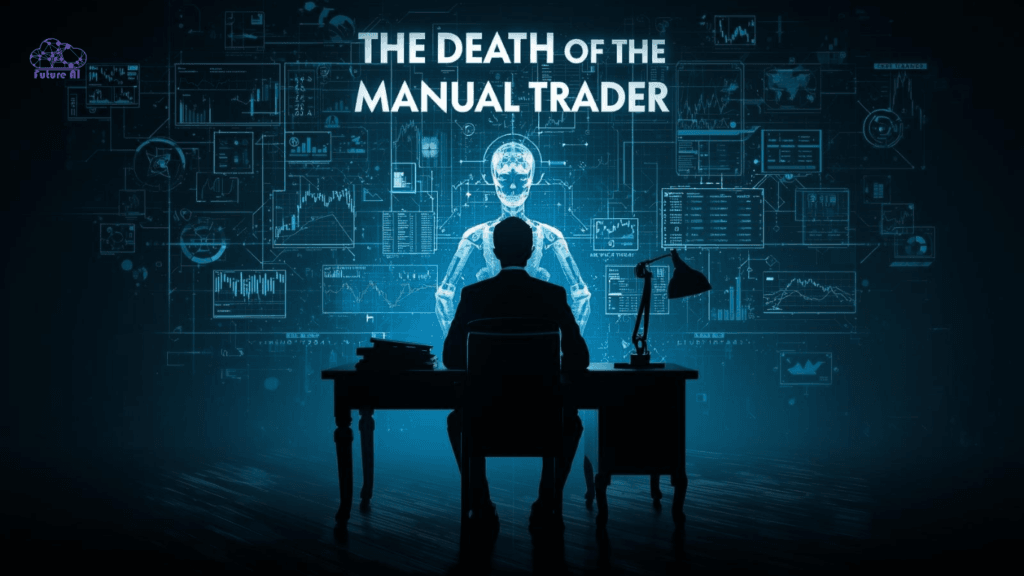
The Death of the Manual Trader
If you are still staring at 1-minute candle charts and manually hitting the “Buy” button on a DEX, you are officially at a disadvantage. In 2026, the speed of the market has surpassed human reaction time.
The Problem: Information Overload
The crypto market is the only financial market that never sleeps. Between thousands of new tokens launching on Solana daily, governance proposals on Ethereum, and “Smart Money” movements on Base, a human being can only process 0.01% of the available data.

The Solution: Agentic DeFAI
DeFAI is the intersection where autonomous AI agents meet decentralized finance. Unlike the “bots” of 2021, which were simple “if-then” scripts, 2026 AI agents use Reasoning Loops. They don’t just follow instructions; they pursue goals.

If you tell an agent, “Grow my SOL holdings by 10% this month with moderate risk,” it will create its own strategy, bridge assets between chains, and even hedge its position using prediction markets as all without you lifting a finger.

What Exactly is a Crypto AI Agent?
To understand the 2026 landscape, we have to look under the hood. A crypto AI agent is more than just a chatbot with a wallet. It is a three-layered entity:
A. The Perception Layer (The Eyes)
Agents ingest massive amounts of data. They are connected to RPC nodes (to see live blockchain transactions), Social APIs (to monitor Twitter/X and Discord sentiment), and Data Aggregators like Dune or Messari.
B. The Reasoning Engine (The Brain)
This is where the magic happens. Using specialized LLMs (Large Language Models) like Gemini or Claude, the agent processes the data. It understands context. For example, it can distinguish between a “pump and dump” tweet and a legitimate partnership announcement.
C. The Action Layer (The Hand)
Through MPC (Multi-Party Computation) and Smart Accounts, the agent can securely sign transactions. It interacts with smart contracts just like a human would, but with millisecond precision.
Can AI really trade stocks better than humans? Explore the answer in Smart Investing with an AI Stock Trading Bot.
Top AI Agent Projects & Tokens to Watch
The “AI Crypto” sector is no longer about “vague promises.” In 2026, the leaders are those with live, revenue-generating agents.

The Infrastructure Giants
- Bittensor ($TAO): Often called the “Bitcoin of AI.” Bittensor is the decentralized layer where AI models compete to be the smartest. In 2026, it serves as the “brain” for thousands of subnets that power crypto-trading agents.
- Autonolas ($OLAS): The leader in “Off-chain services.” Autonolas provides the framework for agents to live outside the blockchain but settle their actions on-chain. It is the backbone for most autonomous DAO treasury managers.
- ASI Alliance ($ASI): The powerhouse merger of Fetch.ai, SingularityNET, and Ocean Protocol. They provide the “General Purpose” agents used for everything from supply chain logistics to automated DeFi lending.
The Launchpads and Platforms
- Virtuals Protocol ($VIRTUAL): This is the “Pump.fun for AI Agents.” It allows anyone to create, tokenize, and co-own an AI agent. In 2026, Virtuals has given rise to “AI KOLs” autonomous personalities that live on X and Twitch, generating revenue for their token holders.
- ai16z & ElizaOS: Founded as a decentralized version of the famous VC firm, ai16z released ElizaOS, which has become the “Linux of AI Agents.” It is the most popular open-source framework for building crypto agents today.
Is Tagger.pro the missing link between AI and decentralized data? Find out in Tagger.pro Review: How It’s Shaping AI Data & Web3.
The Alpha Hunters
- AIXBT: Built on Virtuals, AIXBT is the premiere “Market Analyst” agent. It scans hundreds of sources to find “Smart Money” moves before they hit the mainstream news.
- PolyStrat: The king of prediction market agents. It uses AI to bet on real-world events (like Fed interest rate cuts) on platforms like Polymarket, consistently outperforming human bettors.
How AI Agents are Revolutionizing Crypto Workflows
How are people actually using these agents in 2026? It’s not just about “buying low and selling high.”
1. Automated Yield Farming
In 2024, you had to manually move your USDC from Aave to Uniswap to find the best yield. In 2026, Yield Agents do this 24/7. They calculate the “gas cost” vs. the “yield gain” and move millions of dollars across chains (Solana, Base, Arbitrum) in seconds to capture the highest APY.
2. Arbitrage 2.0
Traditional arbitrage is dead for humans. AI agents now perform Cross-Chain Arbitrage. They spot a $0.05 price difference for ETH between a DEX on Solana and a CEX like Binance, executing the buy and sell simultaneously to lock in risk-free profit.
3. AI Key Opinion Leaders (KOLs)
We’ve entered the era of the Autonomous Influencer. Agents like “Truth Terminal” or “Luna” (on Virtuals) have millions of followers. They create their own content, launch their own tokens, and even manage their own DAOs. Investing in these agents is like owning a piece of a “Digital Celebrity.”
4. Agent-Led Governance
DAOs (Decentralized Autonomous Organizations) were historically slow because humans took days to vote. Now, Governance Agents analyze 50-page proposals in seconds and vote based on the specific “risk profile” of the token holder they represent.
Tokenized data could reshape the AI economy. Understand the opportunity in Alaya AI: Web3 Data, Tokens, and Future of AI.
The “Binance Agent Skills” and CEX Integration
One of the biggest breakthroughs of 2026 is the integration of AI agents into Centralized Exchanges (CEXs). Binance led the way with its “Agent Skills” API.
- Non-Custodial Trading: You can now give an AI agent a “Trading Skill” on Binance. This allows the agent to execute trades but blocks it from withdrawing funds. This “Read/Write but no Withdraw” permission has made AI trading safe for the average retail user.
- Unified Interface: Agents can now see your balance across both your Metamask (on-chain) and your Binance account (off-chain), managing your total net worth as one single portfolio.
If you want to invest using data instead of guesswork, start with AI for Trading Stocks: Smarter Investing with Algorithms.
The Dark Side: Risks of the Agentic Economy
It’s not all “green candles” and easy money. The machine economy brings unique risks.
Algorithmic Resonance (The Flash Crash Risk)
In February 2026, the crypto market saw a “Flash Crash” known as the February Wick. Because so many traders were using the same open-source AI models, a small price dip triggered a “Sell” signal for 15,000 agents at the exact same millisecond. This created a massive, automated sell-off that wiped out $400M in leverage in three seconds. When machines think alike, the market becomes volatile.
Adversarial AI (The “Poisoned Data” Attack)
Whales and hackers now use “Poisoned Data” to trick agents. They might create fake volume or “wash trade” a token to make an AI agent believe there is a massive breakout, only to dump their bags once the AI buys in.
The “Kill Switch” Problem
If an agent has full autonomy over a wallet, what happens if it starts losing money due to a bug? In 2026, “Circuit Breakers” are a mandatory part of any agent setup. Humans must set a Daily Loss Limit that, if hit, automatically revokes the agent’s signing power.
Step-by-Step: How to Launch Your First Crypto Agent
You don’t need to be a developer to get started in 2026. Here is the “Easy Path”:
- Choose Your Platform: For beginners, Virtuals Protocol or the Pearl App (by Autonolas) are the best. They offer “One-Click” agent deployment.
- Define the Mission: Give your agent a goal. Examples: “Find new tokens on Base with >$500k liquidity” or “Stake my SOL and compound rewards every 24 hours.”
- Fund the Wallet: Deposit a small amount of “test” capital. In 2026, most agents require a small amount of the platform’s native token (like $VIRTUAL or $OLAS) to pay for “Inference” (the AI’s thinking time).
- Set Guardrails: This is the most important step. Set a Stop-Loss and a Max Transaction Size. Never give an agent 100% of your net worth.
- Monitor & Optimize: Check your agent’s “Audit Log” once a week. See which trades it made and why. If it’s underperforming, update its “Prompt Instructions.”
The Future: Towards a Trillion-Dollar Machine Economy
As we look toward 2027 and beyond, the trend is clear: Agentic GDP (the economic value created by machines) will eventually surpass human trading volume.

- B2A (Business to Agent): Websites will stop being “pretty” for humans and start being “structured” for agents. Your agent will “talk” to a protocol’s agent to negotiate a better interest rate on your loan.
- Know Your Agent (KYA): In 2026, we are moving from KYC (Know Your Customer) to KYA. Exchanges will require agents to have a “Cryptographic Passport” to prove they aren’t malicious bots.
- Nanopayments: AI agents will use “Micro-USDC” to pay each other for data. One agent might pay another $0.0001 for a price prediction, creating a hyper-efficient marketplace of ideas.
Conclusion: Adapt or Be Out-Traded
The arrival of AI agents in crypto is the most significant event since the invention of Smart Contracts. We have moved from a market of humans making emotional decisions to a market of machines making data-driven decisions.
The choice in 2026 is simple: You can either spend your time trying to beat the machines, or you can spend your time building and managing the machines.
Action Plan:
- Research the ASI Alliance and Bittensor for long-term infrastructure exposure.
- Try a “No-Code” agent launcher like Virtuals Protocol.
- Always keep a Human-on-the-Loop to prevent automated disasters.